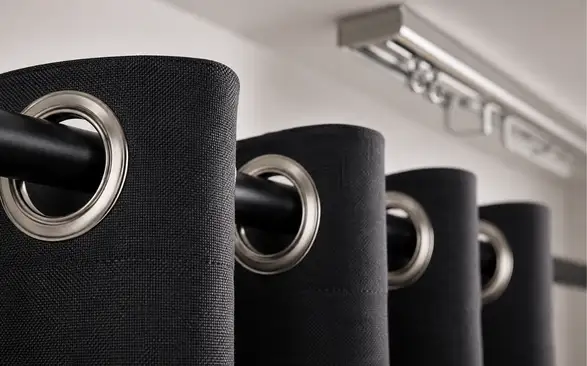
Eyelet ring curtains hang from metal rings punched straight into the fabric, which lets the curtain glide along a rod with almost no resistance. In Doha, where bedroom windows can be catching direct sun before 7am for half the year, that ease of movement matters as much as the look. The real question homeowners in Qatar are asking is whether this heading style holds up once the fabric is doing actual work against heat, glare, and UV, rather than just framing a window nicely.
The eyelet part refers to the header, not the fabric. It describes how the curtain attaches to the rod, nothing more. Aspire Blinds Doha lists eyelet alongside pencil pleat, wave heading, and velvet as heading options across its blackout curtains range , which means the ring style is a hanging mechanism rather than a fixed material. That distinction matters in a hot climate, because an eyelet header pairs just as easily with a dense blackout lining as it does with a lighter sheer weave.
A curtain built for Doha use typically combines the eyelet header with a blackout lining rated to block close to 99.9% of visible light and 100% of UV rays. The eyelet rings themselves add no insulating value on their own. What sits behind them, the lining and the weave density, is what actually does the work against heat.
Color range plays into this too, though less than fabric density does. The blackout line comes in over 30 colors across the eyelet, pencil pleat, wave, and velvet headings, giving a household room to match interior style without giving up on lining performance. A dark eyelet curtain and a pale one built on the same lining will block roughly the same amount of heat and UV, even if the room feels visually different.
Sunrise in Qatar's summer months arrives early and hits bedroom glass at a low, direct angle, often before most households are awake. Standard drapery softens that light without stopping it. A blackout-lined eyelet curtain, by comparison, is built to eliminate it, along with a meaningful share of the heat that would otherwise pass through the glass.
The U.S. Department of Energy notes that closing insulating window coverings during daylight hours is one of the more effective ways households can manage solar heat gain. For a home running air conditioning for most of the year, that reduction in heat entering through the window is a practical outcome, not a marketing line. It also cuts UV exposure reaching furniture, flooring, and upholstery near the window, which fades noticeably faster under Qatar's sun than it would in a milder climate.
There is a secondary effect worth noting too. A denser blackout fabric behind an eyelet header also dampens some outside noise, which matters more in Doha's busier residential zones near main roads than in quieter areas of Al Wakra or Al Rayyan. It is a side benefit of the lining, not something the eyelet ring contributes on its own.
Eyelet rings were designed to sit directly on a straight pole, but Doha homes increasingly use ceiling-mounted curtain track systems instead of a visible rod, particularly in villas with floor-to-ceiling glass. An eyelet header does not slide onto a track the same way pencil pleats or wave heading does, since the ring is fixed to the fabric rather than gathered onto separate glider hooks.
For a ceiling track setup, the curtain usually needs hooks fitted through the header or a wave-style heading instead. Anyone who wants eyelet ring curtains in a room already fitted with a hidden ceiling track should raise this during the measurement visit, since the two systems are not automatically interchangeable. Getting it wrong at the ordering stage means a curtain that will not hang the way it was meant to.
A measurement visit is where this detail usually gets caught, since it confirms what hardware is already installed before any fabric is cut. Villas in West Bay and The Pearl, where floor-to-ceiling glass and hidden tracks are common, are where the question comes up most.
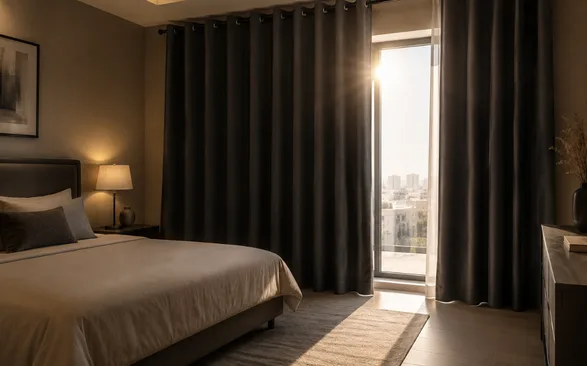
Eyelet curtains suit rooms where the fabric gets opened and closed often, since the rings glide with minimal resistance and need nothing more than a standard rod in most residential settings. Bedrooms and living rooms with conventional hardware are the most straightforward fit. Full-height glass in a formal majlis, or any room running a hidden ceiling track, tends to suit pencil pleats or wave headings better, for the compatibility reason covered above.
Fabric choice still carries most of the practical weight, regardless of header style. A velvet or triple-weave blackout fabric on an eyelet header gives close to full darkness and the strongest heat resistance. A sheer or lighter weave on that same header lets in more light and does noticeably less against Doha's afternoon sun.
The eyelet ring itself is a hanging mechanism, not a climate solution. What actually decides whether a curtain earns its keep in Qatar's heat is the fabric and lining sitting behind that header, plus whether the room's hardware, rod or track, supports the style in the first place. Worth checking before ordering: what fabric is behind the eyelet curtain you're considering, and does your window take a standard rod or a ceiling-mounted track?
On their own, no. The rings are just a header. Heat and light blocking comes from the fabric and lining underneath. Pair an eyelet header with a blackout or thermal lining and you get the same performance any other heading style would get with that same lining behind it.
Motorized tracks generally rely on gliders and hooks rather than fixed rings, so eyelet headers aren't the typical choice for automation. Wave heading or pencil pleat pairs more naturally with a motorized curtain track system if remote control is the priority for your room.
Velvet or triple-weave blackout fabric gives the darkest room and the strongest heat resistance. Sheer or lightweight fabric on the same eyelet header still filters glare but lets in noticeably more heat and light through Qatar's long summer stretch.
Not directly. Eyelet rings sit on a straight pole rather than sliding hooks, so a ceiling track usually needs a different heading, or hooks fitted through the header instead. Confirm this during measurement if your room already has hidden track hardware installed.
Kitchens face more moisture than bedrooms, so fabric choice matters more than header style here. A moisture-resistant weave on an eyelet ring performs fine, but a delicate sheer fabric in the same spot will wear faster near steam and condensation.
© 2026 - Aspire Furniture All rights reserved. Powered By SilverHost