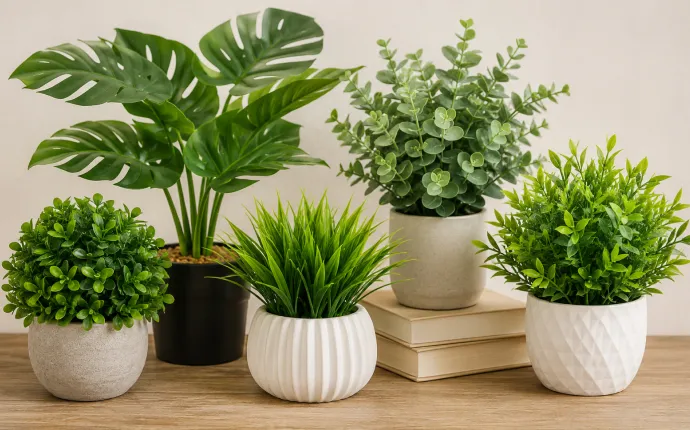
You know the feeling. You buy a gorgeous faux plant, bring it home, place it on the shelf, and it just... looks fake. Stiff leaves. Plastic sheen. That tell-tale "department store display" energy. It doesn't have to be that way. Knowing how to make artificial plants look real is honestly more about placement and styling than the plant itself. A few smart moves can turn even a budget faux plant into something your guests will actually touch just to check.
Here's what actually works.
The biggest mistake people make is treating faux plants like decorations instead of living things. Real plants grow toward light, sit at natural angles, and rarely look perfectly symmetrical. Your artificial ones should too.
Put them near windows. Not because they need sun, but because that's where real plants would be. Your eye reads that context instantly. A fake fiddle-leaf fig next to a bright window reads as believable. The same plant in a dark corner reads as a prop.
Also, avoid placing them in a straight, upright line. Tilt the pot slightly. Rotate the plant so the fuller side faces you naturally, not deliberately. Real growth is imperfect, so fake it.
Plastic containers are the fastest way to break the illusion. Repot your faux plant into a terracotta pot, a woven basket, or even a simple ceramic. Then top the exposed foam or base with real soil, pebbles, or moss from a craft store.
This is a small detail that carries a lot of weight. When someone looks at your faux succulent in a clay pot with textured soil on top, the brain just fills in the rest. It looks planted, not placed.
Most artificial plants arrive compressed from packaging. The leaves are flattened and bunched together, which is nothing like how real foliage grows. Before you even think about placement, spend five minutes working with the plant.
Gently spread each branch outward. Bend stems at slight angles rather than leaving them perfectly straight. Separate leaves that are clumped together. For hanging plants or silk palms, let some strands fall naturally rather than arranging them evenly on all sides.
This step alone accounts for roughly 80% of the difference between a realistic-looking faux plant and a clearly fake one.
This one sounds obvious but gets skipped constantly. Dust settles on artificial leaves fast, and a dusty surface picks up light in a way that real plant leaves simply don't. It creates a matte, slightly grey appearance that immediately signals "fake."
Wipe leaves down with a slightly damp cloth every couple of weeks. For textured silk plants, a soft makeup brush works well to get into the folds without damaging anything. Clean faux plants genuinely fool people. Dusty ones don't.
One of the most effective tricks interior stylists use is mixing fake plants with real ones in the same arrangement. A genuine succulent next to a faux one instantly lends credibility to the whole group. Your eye compares them, decides they look similar enough, and stops questioning it.
This works especially well in Qatar's climate, where some real plants like snake plants, aloe vera, and rubber plants are genuinely low-maintenance indoors. Mix a really hardy plant with a few well-styled faux ones, and the whole corner looks like a thoughtfully curated green space.
Here's the truth: styling techniques only go so far. A very low-quality plastic plant with a visible seam and neon green colour won't look real no matter how you style it. The foundation matters.
Look for artificial plants made with silk or fabric leaves rather than flat plastic. Realistic vein detailing on leaves, slight colour variation from leaf to leaf, and UV-resistant materials for anything going near windows or outdoors all separate good artificial greenery from cheap imitations.
When every artificial plant in a room is the same size, same color, and same pot type, the arrangement reads as a purchase, not a collection. Real plant lovers accumulate plants over time, from different places, in mismatched pots.
Vary your pot sizes. Mix trailing plants with upright ones. Put a tall faux palm in the corner and a small faux potted cactus on the windowsill nearby. The variety creates a lived-in, organic feel rather than a staged one.
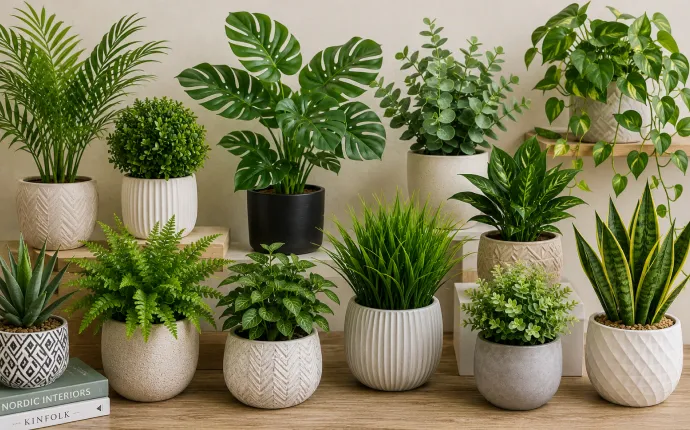
How to make artificial plants look real is genuinely less about spending more money and more about paying attention to the details. Real soil on top of the pot, natural placement near light, regularly dusted leaves, and a mix of sizes will take your faux greenery from "clearly plastic" to "wait, is that real?"
In Qatar's warm climate where maintaining live plants takes real effort, high-quality artificial plants styled thoughtfully are a practical and beautiful alternative for any home or office space.
Repot them into real clay or ceramic pots and add actual soil or pebbles on top. Then spend a few minutes bending and separating the leaves so they don't look compressed. Cheap plants can look significantly better with just these two steps.
Not if you choose decent quality ones. Mix a hardy real plant, like a snake plant, with a faux one nearby. Your eye compares them, notices the similarities, and usually stops there. The contrast actually helps both look better.
Wipe leaves every couple of weeks with a slightly damp cloth. For fabric or silk leaves, a soft brush works better. Dust is the number one thing that makes faux plants look obviously fake, so this is worth staying on top of.
Near natural light sources like windows, even though they don't need it. That placement cues your brain that they belong there. Avoid dark corners unless you're pairing them with real warm lighting pointed at them.
Yes, they're actually well-suited to it. No watering schedules in the heat, no worrying about dust storms affecting delicate leaves, and no dealing with difficult soil conditions. Quality faux plants with UV protection work well both indoors and in covered outdoor spaces.
© 2026 - Aspire Furniture All rights reserved. Powered By SilverHost