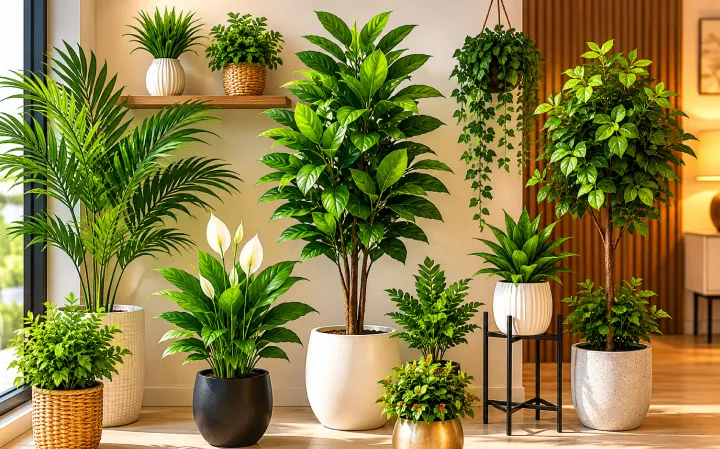
Someone walks into a beautifully designed reception. Marble countertop, warm lighting, a tall, lush palm in the corner. They reach out to touch a leaf. It is artificial. Do they walk out? No. They carry on with their visit. The question is, are fake plants tacky? less to do with the fact that they are artificial and more to do with the quality and context of what is used. In 2026, this conversation has shifted considerably.
The stigma around artificial plants comes from a specific era, roughly the 1970s to the 1990s, when fake plants meant dusty plastic ferns with an obvious sheen. Nobody was fooled. The leaves felt wrong. The colours were flat. That version of the fake plant absolutely was tacky, and the reputation stuck.
What has changed is manufacturing quality. High-end artificial plants today use silk, polyester blends, and in some cases. The texture, colouring, and structural detail are designed to pass a visual inspection without any obvious tells. In a well-lit room, the difference is not visible from a normal viewing distance.
Interior design professionals across commercial and residential sectors have broadly moved past the tacky question. The practical arguments for artificial plants in certain contexts are too strong to ignore. In offices with inconsistent lighting, in Qatar's intense summer heat, in spaces where live plants simply cannot be maintained reliably, artificial options are the sensible choice. The design question becomes not 'real or fake' but 'good quality or poor quality.'
Qatar's climate is genuinely challenging for live plants. Extreme summer temperatures, low humidity indoors from heavy air conditioning, and inconsistent natural light in many commercial and residential spaces make maintaining real plants harder than it sounds. Artificial plants in Qatar remove those variables entirely. They look consistent year-round, require no watering schedule, and hold up in the kinds of environments where a real plant would struggle within weeks.
Context matters. Artificial plants work best in locations where maintenance is impractical, where real plants would not survive, or where consistency is more important than authenticity. Office reception areas, retail display spaces, hotel lobbies, outdoor balconies in high-heat environments, and large open-plan interiors with limited natural light are all strong use cases. In these settings, a well-chosen artificial plant does the visual job without the ongoing cost of plant replacement.
One area where artificial plants have become genuinely fashionable is green wall installations. These vertical garden panels are a staple of modern commercial interiors and exterior building features. Maintaining a live green wall requires irrigation systems, specialist maintenance contracts, and careful plant selection. Artificial green walls deliver the same visual impact at a fraction of the ongoing cost. For businesses and property managers in Qatar, this is a practical consideration worth taking seriously.
The rules are simple. Avoid obviously plastic textures, especially shiny leaves that catch light in an unnatural way. Choose plants appropriate to the space size: small pots in large rooms get lost. Mix plant heights and shapes for visual variety. Keep them clean, because dusty artificial plants immediately read as neglected. And buy from a supplier that carries realistic, high-quality specimens rather than generic budget stock. Aspire Blinds Doha has been supplying artificial gardens in Qatar since 2012, with a range that covers indoor potted plants, outdoor trees, silk palms, hanging plants, and custom green wall decorations.
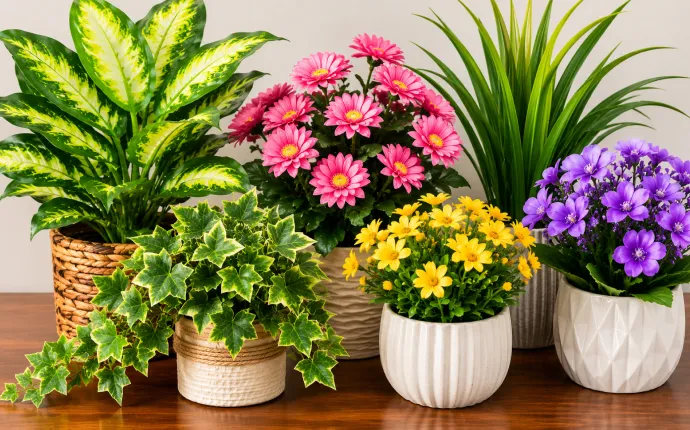
Are fake plants tacky? The honest answer is that some are and some are not, and the difference is entirely about quality, choice, and placement. The era of obviously plastic greenery belongs to the past. What is available today, particularly at the quality end of the market, earns its place in well-designed spaces without apology. The better question is whether you are choosing the right type for your specific space. What room or area have you been considering adding greenery to, and what has been holding you back?
Not if they are chosen and placed well. High-quality artificial plants, particularly large-format pieces like silk palms or realistic indoor trees, read as intentional design choices in professional spaces. The key is quality. A cheap plastic pot plant in a corner is what gives artificial plants a bad name.
At a normal conversational distance, good-quality artificial plants do not announce themselves. The closer the inspection, the more obvious the difference becomes. For most interior applications, that level of scrutiny never happens, so yes, they read as real.
They are genuinely practical for Qatar specifically. The heat, the dry air-conditioned interiors, and the limited natural light in many spaces make live plants difficult to maintain. Artificial ones handle all of that without any care requirement.
Dust them regularly. Wipe leaves with a slightly damp cloth every few weeks. Keep them out of direct intense sunlight for extended periods if the material is prone to UV fading. That is essentially the whole maintenance list.
Some can, specifically those rated for outdoor use with UV-stabilised materials. Standard indoor artificial plants will fade and degrade in direct outdoor sun. Look for products specified as outdoor-suitable if they will be on a balcony, courtyard, or building exterior.
© 2026 - Aspire Furniture All rights reserved. Powered By SilverHost